Tuesday, 28 October 2014

“The Waking" by Theodore Roethke

        A poem that gives me joy:


    The Waking
     
    Theodore Roethke

I wake to sleep, and take my waking slow.   
I feel my fate in what I cannot fear.   
I learn by going where I have to go.

We think by feeling. What is there to know?   
I hear my being dance from ear to ear.   
I wake to sleep, and take my waking slow.

Of those so close beside me, which are you?   
God bless the Ground!   I shall walk softly there,   
And learn by going where I have to go.

Light takes the Tree; but who can tell us how?   
The lowly worm climbs up a winding stair;   
I wake to sleep, and take my waking slow.

Great Nature has another thing to do   
To you and me; so take the lively air,   
And, lovely, learn by going where to go.

This shaking keeps me steady. I should know.   
What falls away is always. And is near.   
I wake to sleep, and take my waking slow.   
I learn by going where I have to go.


Theodore Roethke, “The Waking” from Collected Poems of Theodore Roethke.
Copyright 1953 by Theodore Roethke. (Doubleday, 1961)


Saturday, 11 October 2014

The Art of Poetry: T. S. Eliot's “The Dry Salvages"

Photograph: Express/Getty Images

(See below for the full text of the poem, and click here to hear T. S. Eliot reading “The Dry Salvages”.)

I wrote the following for the edX course I’m currently taking, “The Art of Poetry”. Although I have been terribly busy and having a bit of trouble keeping up with the assignments, the course is providing some of what I had intended when deciding to create Another Fine Day In The Scriptorium: an opportunity to slow down and immerse myself in the calm depths of the written word.

Getting up early this morning, I brought out my copy of The Four Quartets and, while pacing the room, repeatedly read aloud the third quartet (which, oddly, has five sections, not four), “The Dry Salvages”. I am grateful to the authors of the course for inspiring me to return to this wonderful poem and sink into it. I will have to make many returns, like the tide, to imbibe it all.

Essay: The most difficult poem I've read that compelled my interest is “The Dry Salvages” from T.S. Eliot’s Four Quartets.

Part of the difficulty is the length: ten pages. Part is the language and slipperiness of Eliot’s thinking processes.  When I read it I can grasp the concrete images he offers—the river as a brown god, the shattered lobsterpot, the salt on the briar rose—but like the river something is moving underneath the words, underneath my conscious understanding of them, so that when I reach the end of the first section I am drenched in unexpected sadness and a sense of the immense sweep of existence. I look back asking, why sadness? Is it the ignorance of humans who wrestle the river without trying to understand it? Is it the nature and naturalness and omnipresence of the river itself? Is it the worried women, of whom I am one, “Lying awake, calculating the future, Trying to unweave, unwind, unravel...” I think it is all of this and more.

Suddenly I realize I am describing not only the difficulty but the pleasure. Both grow from the sublety and complexity of his words, so that to flow to the poem’s end I have to toss myself onto its waters and not try to cling to any solid thing, and that is both frightening and liberating.

Part of the pleasure, too, is simply his timing, and the weight and texture of his words—“sullen, untamed, and intractable”—that offer the concepts in such a physical way. At the end of section one, when I have moved with the river for two pages and then stopped with the worried women, the river and the women are gathered together in an expression of time itself, and how it wears on and in us. The beats of the stanza pull that expression into me by unfurling long, breathless line after long, breathless line and ending with two short taps:
“Clangs
The bell.”

Reading on, the sense grows of a great compassion and even pity in the narrator as he hands to us, line upon line, the vision of ourselves as fishers on a vast ocean, not pilots of our own fate so much as creatures of our vast, destinationless surroundings and mortal lives, creatures that might cling to this belief or that, but must in the end let them go.

It is difficult because it tackles the greatest difficulties of life, expanding from the intimate to the cosmic and back to the intimate again—the individual placed in the wholeness but not made small.

Read aloud, the lines of the poem rock back and forth like waves, and with all the talk of death and renunciation, there is something soothing in their very rhythm. This is not a hopeless poem, or a hopeful poem, but a poem of that which is, and it is deeply moving, and deeply beautiful. This is a poem I can continue to feed from for the rest of my life.


THE DRY SALVAGES
(No. 3 of Four Quartets by T. S. Eliot)

(The Dry Salvages—presumably les trois sauvages—is a small group of rocks, with a beacon, off the N.E. coast of Cape Ann, Massachusetts. Salvages is pronounced to rhyme with assuages. Groaner: a whistling buoy.)

I

I do not know much about gods; but I think that the river
Is a strong brown god—sullen, untamed and intractable,
Patient to some degree, at first recognised as a frontier;
Useful, untrustworthy, as a conveyor of commerce;

Wednesday, 1 October 2014

Art of Poetry: with Seamus Heaney's “Last Look"


I've signed up for edX's course the Art of Poetry, taught by Robert Pinsky. (There is still time to sign up--it just started yesterday.)

I'm excited about it--immersing myself in poetry is what I planned to do with the next three or four months, and I have been diligently working on my own poems for a few weeks now. What perfection to have Pinsky's guidance and the inspiration of all the participants and poets whose work is featured in the course.

Part of the coursework is to present our own "anthology": favourite poems by other authors and what they mean to us. I present my first response here.


Last Look
by Seamus Heaney

In Memoriam E.G.

We came upon him, stilled
and oblivious,
gazing into a field
of blossoming potatoes,
his trouser bottoms wet
and flecked with grass seed.
Crowned blunt-headed weeds
that flourished in the verge
flailed against our car
but he seemed not to hear
in his long watchfulness
by the clifftop fuschias.

He paid no heed that day,
No more than if he were
sheep’s wool on barbed wire
or an old lock of hay
combed from a passing load
by a bush in the roadside.

He was back in his twenties,
travelling Donegal
in the grocery cart
of Gallagher and Son,
Merchant, Publican,
Retail and Import.
Flourbags, nosebags, buckets
of water for the horse
in every whitewashed yard.
Drama between hedges
if he met a Model Ford.

If Niamh had ridden up
to make the wide strand sweet
with inviting Irish,
weaving among hoofbeats
and hoofmarks on the wet
dazzle and blaze,
I think not even she
could have drawn him out
from the covert of his gaze.

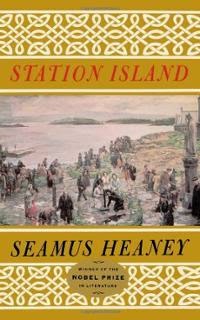
From Station Island by Seamus Heaney (1985)

This link takes you to the typed poem which is also read aloud beautifully by an uncredited Irishman. http://www.rewardinglearning.org.uk/microsites/poetry/heaney_hardy/the_look/

 I am blown away by this poem on so many levels. Each word is essential, and if stayed with a while, brings me straight into the seedy physicality of this moment, and a wonderful, halfwild physicality it is.

On first reading I am swept away with compassion and sympathy for this old man who is looking out over his world at his long ago life. Because I came from the Canadian prairies, with strong connections to farms and farmers and old people whose clear insistent ways were being—unbeknownst to me, who couldn’t understand their aggravation—sheared away from their centrality in the world by the unhesitating crush of change, I feel in my own body the empty-handedness of his loss.

Here of course I am reading more into the poem than is actually stated. He may not feel loss, but I do. I fought hard against the rigid thinking of my elders, even as I loved them immensely and suffered unbearably under their disapproval of my “crazy” beliefs and life. But at the same time I rose from these people just as this man rose from the hills and roads and work that shaped him. Now that they are gone, and I’m living in a world where few of my acquaintances knew or felt bonded to the people and ways—much of which had great value to me even then—that I ran from and now have lost, I find myself bereft, and longing for a visit home.

How often I am not quite in 2014, standing instead gazing into 1963. When I read this poem I am the gazer and the onlookers, both.

I love that the onlookers are looking on. Though he is by now a lock of hay on a bush, a small integral element of his environment, he is real and current to them. They may not exist for him, but for them he exists intensely; they witness him as I witness my elders and their vanished way of life. Heaney and his unnamed companion have great empathy for the gazer, but they are on the roadside, they are comfortable in now; they love the man of the past and the present both at once.

It is with great delight that I arrive at the final stanza, where Heaney reminds me of the magical precedents of Ireland, of the queen of the Land of Youth who came from the sea and enticed Oisín away to the Otherworld for three hundred years. She is from a time far more ancient than the gazer’s cart and Model Ford, and she is as much of him, more even, than she is of Heaney and of me.

“Last Look” is a trip into a beloved past that is firmly rooted in today, tying both together with the dancing power of a goddess on her horse clattering about the beach.

And even she can’t flush him from the covert of his gaze. What a wonderful word! He is the hay, he is the hills and cart, he is the bird of memory hidden in the brush.

Friday, 18 July 2014

Afternoon on a Hill


Landscape; from Bartholomaeus Anglicus,
All the Proprytees of Thynges, Westminster 1495.


I suppose some modern folk may look at the name Edna St. Vincent Millay, or the rhymes with which this poem is crafted, and roll their eyes. That's too bad, in my opinion. Over the years I have returned to "Afternoon on a Hill" many times because it takes me out of my busy urban life and up to a quiet hillside.

There I take a calm, then a calmer breath, find a moment to notice my own and the world's resilience and renewal, and return in time down that hill refreshed and happy. I hope that you may find your own hill and your own quiet moment with this poem.


Afternoon on a Hill

Edna St. Vincent Millay, 1892 - 1950

I will be the gladdest thing
   Under the sun!
I will touch a hundred flowers
   And not pick one.

I will look at cliffs and clouds
   With quiet eyes,
Watch the wind bow down the grass,
   And the grass rise.

And when lights begin to show
   Up from the town,
I will mark which must be mine,
   And then start down!


Thursday, 5 June 2014

Sleeping in the Forest by Mary Oliver


Three trees; detail of a page from Sarum Horae, Paris (Pigouchet for Jean Richard) 1494.

by Mary Oliver 

I thought the earth remembered me,
she took me back so tenderly,
arranging her dark skirts, her pockets
full of lichens and seeds.
I slept as never before, a stone on the river bed,
nothing between me and the white fire of the stars
but my thoughts, and they floated light as moths
among the branches of the perfect trees.
All night I heard the small kingdoms
breathing around me, the insects,
and the birds who do their work in the darkness.
All night I rose and fell, as if in water,
grappling with a luminous doom. By morning
I had vanished at least a dozen times
into something better.

from Sleeping In The Forest
© Mary Oliver


Monday, 5 May 2014

THE SCRIBE IN THE WOODS


A hedge of trees surrounds me, a blackbird’s lay sings to me, praise I shall not conceal,
Above my lined book the trilling of the birds sings to me.
A clear-voiced cuckoo sings to me in a gray cloak from the tops of bushes,
May the Lord save me from Judgement; well do I write under the greenwood.


The purpose of this blog is to offer a quiet place for contemplation of writing and related things. I welcome your suggestions.

In an effort to step away from the pressure of the market place I am offering my writing for free in its electronic versions, and will add links as they come available. You can find these links in the page called The Scribe's Stories and Poems.

I'm still exploring my ideas for this blog, and it is a labour of love that will evolve slowly. No time constraints here. Just an opportunity to take a sweet breath and listen to the birds.

One thing I have decided...These posts will all be poems. Poems and images to calm and inspire the creative heart. For everything else, look at the pages.

Poem from the Irish
pg 259
The Classics of Western Spirituality:
Celtic Spirituality

Woodcut from
The Birds, Bartholomaeus Anglicus
circa 1485